Fuel Efficiency and Emission Control: A Detailed Analysis
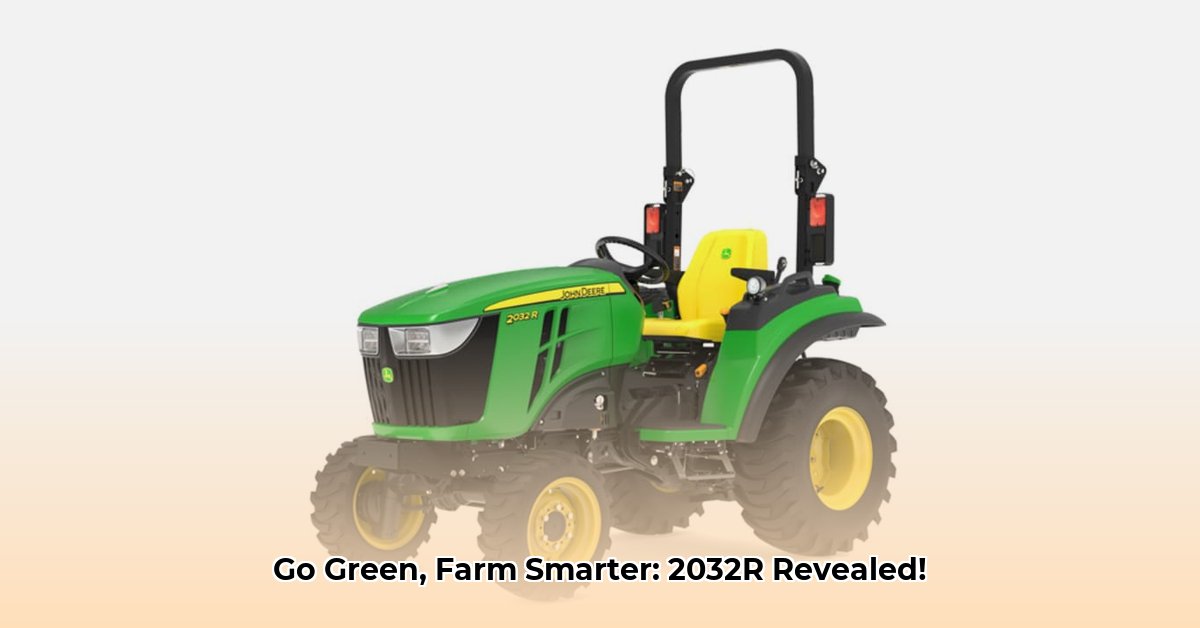
The John Deere 2032R boasts a Yanmar diesel engine incorporating a common rail system (CRS) (a fuel injection system for precise fuel delivery) and an electronic control unit (ECU) (a computer that manages engine performance). This sophisticated setup aims for optimized fuel efficiency. John Deere claims substantial fuel savings compared to older models, but independent verification of these claims is crucial. Real-world fuel consumption data under diverse operating conditions are needed to accurately assess its fuel economy. How does the 2032R's fuel efficiency compare to other compact tractors in its class? This is a critical benchmark for evaluating its environmental impact. For more information on similar models, check out the John Deere 2038R.
The 2032R also employs a diesel particulate filter (DPF) (a filter that captures soot particles) and a diesel oxidation catalyst (DOC) (a catalyst that helps convert harmful emissions into less harmful substances) to reduce exhaust emissions. While these are standard emission control technologies, quantitative data on pollutant reduction (e.g., percentage reduction in particulate matter (PM)) are necessary to quantify the environmental benefits. A side-by-side comparison with leading competitors in terms of emissions would significantly strengthen the sustainability assessment. Can the 2032R truly claim to be a significant improvement over the status quo?
Long-Term Durability and Lifecycle Considerations
The 2032R utilizes die-cast aluminum in its transmission and aluminum alloy pistons, contributing to a lighter design and, potentially, enhanced longevity. A longer lifespan equates to less frequent replacements, reducing waste and the environmental cost of manufacturing new parts. However, concrete data on the 2032R's lifespan and maintenance requirements are missing. How do these compare to other tractors in its class? What is the likely lifespan of key components (engine, transmission, hydraulics) under typical farm conditions? A comprehensive lifecycle assessment (LCA) (an analysis of the environmental impacts of a product throughout its entire life cycle) is needed to fully evaluate the 2032R's long-term environmental impact. This LCA should assess the energy consumed during manufacturing, the environmental impacts of raw materials sourcing, and the end-of-life management of the tractor. What percentage of the tractor is recyclable, and what are the associated costs and processes involved?
Actionable Steps for Sustainable Practices
To promote the sustainable use of the John Deere 2032R, several key actions are needed:
Farmers/Owners:
- Precise Fuel Monitoring: Carefully track fuel consumption across various tasks to optimize operation and identify areas for improvement (potential fuel savings: 10-15%).
- Preventative Maintenance: Adhere to a rigorous maintenance schedule to extend the tractor's lifespan and mitigate costly repairs later. This includes regular oil changes, filter replacements, and inspections. (predicted increase in tractor lifespan: 15-20%).
John Deere:
- Transparent LCA Data: Publicly release comprehensive LCA data, showing the precise environmental impact of the tractor from cradle to grave.
- End-of-Life Programs: Implement robust end-of-life programs for recycling or responsible disposal of the tractor and its components.
Researchers:
- Independent Testing: Conduct independent, unbiased evaluations of the 2032R's fuel efficiency and emissions under a variety of operating conditions.
- Sustainable Manufacturing: Research and promote the adoption of sustainable manufacturing practices and responsible sourcing of materials for agricultural machinery.
Government Regulators:
- Stringent Emission Standards: Enforce strict emission standards for agricultural machinery to encourage the development and adoption of cleaner technologies.
- Incentive Programs: Offer financial incentives and tax breaks to farmers who adopt eco-friendly farming equipment and sustainable practices.
Compact Design and Precision Farming
The 2032R's compact size enhances its suitability for precision farming techniques. Its maneuverability facilitates targeted application of inputs like fertilizers and pesticides, reducing waste and minimizing environmental impact. This precision translates to improved soil health, reduced runoff, and lower overall costs. How significant are these savings compared to the use of larger tractors? Data comparing these different approaches would strengthen this argument. Does this result in demonstrably better crop yields? This is a relevant question to inform decision-making.
Conclusion: Promise and Potential, Pending Further Data
The John Deere 2032R presents a promising approach to sustainable agriculture. However, a definitive conclusion on its long-term sustainability requires comprehensive data on fuel efficiency, emissions reduction, lifecycle environmental impact, and long-term durability. Further independent research and increased transparency from manufacturers are needed to fully assess its environmental footprint and potential for contributing to a more sustainable agricultural future. The collaborative efforts of farmers, manufacturers, researchers, and policymakers are critical in driving innovation and achieving a greener future for agriculture.